I was asked recently about using my products alongside a drug that some have been prescribed to use for the skin as a way to help with acne. So I wanted to share more information about this drug, its risks, the benefits, and a natural alternative so that you can make an informed choice when facing the tough battle of erasing acne.
So…What is it?
Spironolactone is a prescription medication originally developed in the late 1950s as a blood pressure drug. It belongs to a class called potassium-sparing diuretics, meaning it helps the body release excess fluid while holding onto potassium. Dermatologists later noticed it had a useful side effect. It blocks androgen receptors. That discovery led to its off-label use for hormonal acne, hirsutism, and androgen-driven pigmentation in women. It's still primarily a cardiovascular drug being borrowed for skin purposes.
What is it made from?
It's a synthetic steroid compound, manufactured in a lab through chemical synthesis. It isn't derived from plants, herbs, or any food-based source. It's a pharmaceutical molecule designed in a lab, full stop. The active ingredient is structurally similar to a hormone your body produces, which is part of why it interacts with your endocrine system.
Why is it used for skin?
The link is androgens. In women, excess androgen activity can drive overactive oil glands, clogged pores, and inflammatory breakouts, usually along the jawline, chin, and lower cheeks. That's the classic hormonal acne pattern. Spironolactone works by blocking androgen receptors so those hormones can't stimulate oil production as effectively. Less oil, fewer breakouts, sometimes less facial hair growth and less androgen-related pigmentation.
The catch is that it doesn't correct the underlying hormonal picture. It blocks the receptor. The moment you stop, the androgen activity resumes, and for most women the acne returns. It's managing the symptom on the surface while the internal driver keeps signaling underneath.
What are the side effects?
This is where it gets yucky. Because spironolactone affects hormones and fluid balance across your entire body, the side effect profile is real:
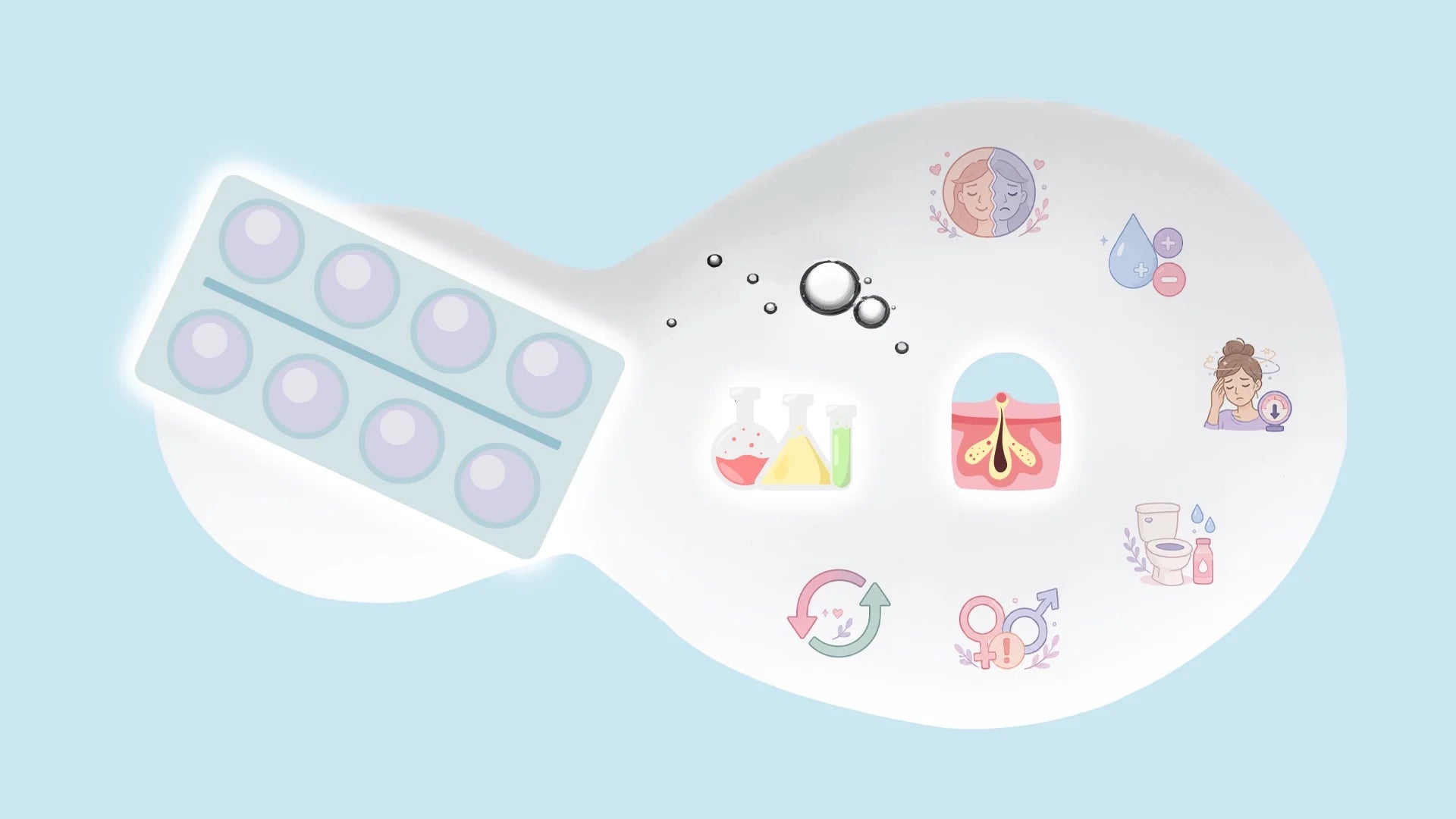
Hormonal disruption. Irregular periods, breast tenderness, and cycle changes are common because the drug is actively interfering with hormone signaling.
Dizziness and low blood pressure. It's still a blood pressure medication at its core. Lightheadedness and fatigue, especially when standing up quickly.
Electrolyte imbalance. It spares potassium, which sounds harmless, but too much potassium can become dangerous. It means regular blood work is required to monitor this.
Frequent urination and dehydration. It's a diuretic. You'll be in the bathroom more, and if hydration drops, the dizziness and fatigue compound.
Mood changes. Some users even report increased anxiety, mood swings, or brain fog.
Rebound when you stop. Because the underlying hormonal driver was never addressed, so many women experience a flare of acne when they discontinue, sometimes worse than before.
You also need ongoing doctor visits and routine blood tests the entire time you're on it. It isn't something you can casually pick up and put down.
A more effective, safer approach
Here's the thing. If hormonal acne is being driven by what's happening inside your body, the real question isn't how do you block the signal, it's how do you actually calm the internal environment that's producing it.
That's exactly what my Clear Complexion Kit was built for. It pairs the Acne Cleanse and the Hyperpigmentation Cleanse together, and that pairing matters because hormonal acne rarely shows up alone. It leaves dark marks behind.
For truly effective long-term results, you need something that addresses the active breakouts and the post-inflammatory pigmentation they create.
Where spironolactone blocks one receptor and stops there, the Clear Complexion Kit works across multiple pathways at once:
Red clover helps support natural hormonal balance, without suppressing your system.
White willow bark acts as a gentle internal exfoliant, helping keep pores clear without stripping the skin's surface.
Burdock root and echinacea help address the bacterial side of acne internally, something topicals struggle to reach and spironolactone doesn't touch at all.
The Hyperpigmentation Cleanse then handles the marks breakouts leave behind, with ingredients like licorice root and polypodium that help regulate melanin and calm inflammation, so dark spots actually fade instead of sitting there for months.
Licorice root helps calm the inflammatory signal that drives post-acne pigmentation and supports a more even tone as the skin renews.
Polypodium helps protect skin from the oxidative stress and light exposure that keep dark spots locked in and reappearing.
White tea extract delivers polyphenols that help quiet the internal inflammation feeding both breakouts and the marks they leave.
Pomegranate extract helps support the skin's natural renewal process, so newer, clearer cells come through as the pigmented ones shed.
The difference is HUGE!
No prescription. No blood tests. No risk of electrolyte imbalance or blood pressure drops. No rebound acne when you stop. No mood disruption from synthetic hormone blocking.
You're working with your body's natural processes instead of overriding them with a drug designed for blood pressure that happens to have a hormonal side effect.
And if it doesn't work for you, there's a 45-day money-back guarantee. Try getting that from a dermatologist visit and a prescription.
I hope this info helps with your decision making, and don’t forget if there is ever anything else you would like to know, please reach out to me!
Talk soon,
K xx