
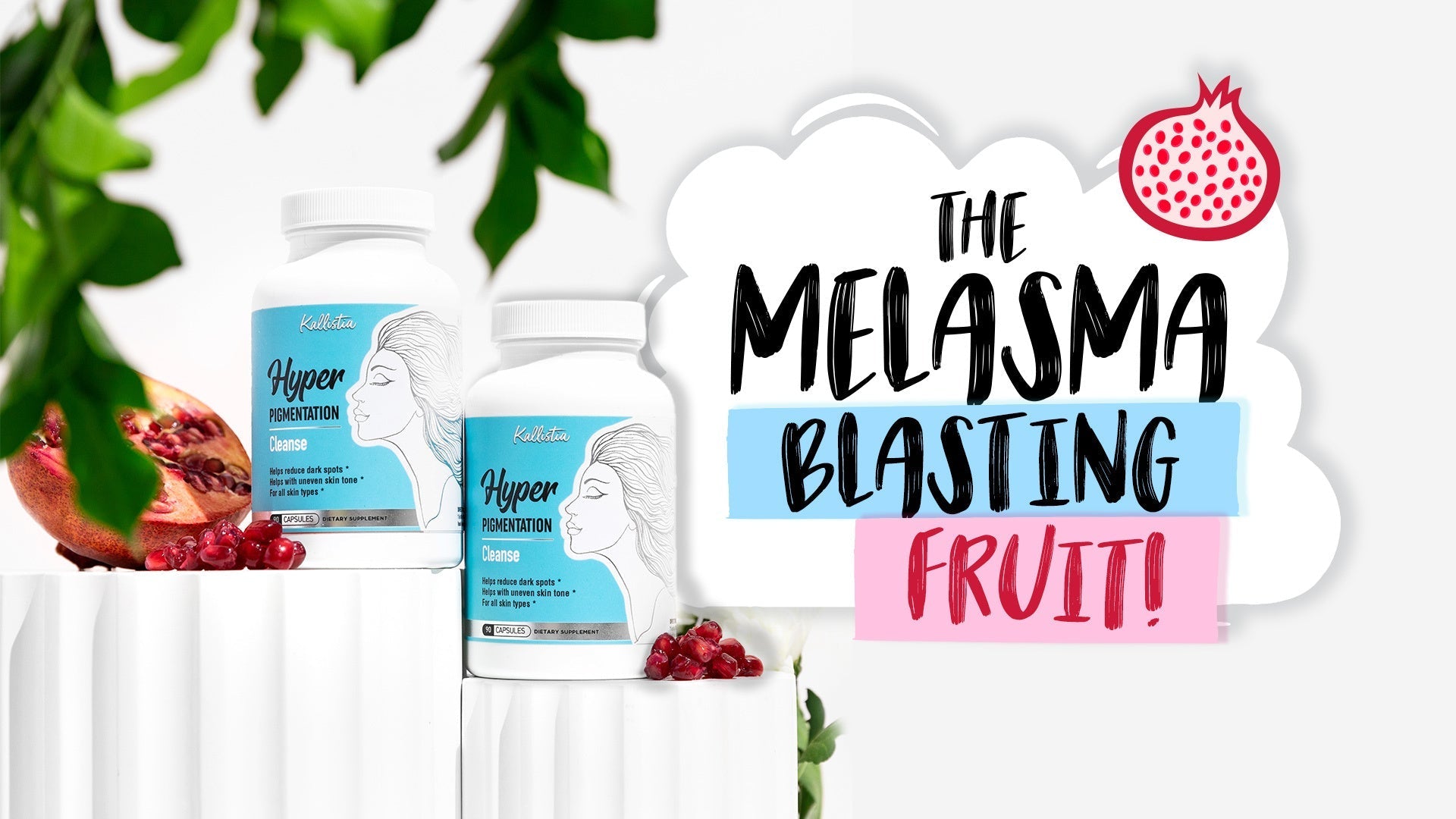
💡 Did you know that this ingredient actually helps to calm melasma from the inside out⁉️
Pomegranate fruit is one of the most powerful natural antioxidants for fading dark spots, hyperpigmentation, and melasma because it works on the internal triggers that topical products can’t reach.
Its polyphenols, especially punicalagins and ellagic acid, help calm the overactive melanocytes that drive excess pigment, while reducing inflammation and oxidative stress that make marks slow to fade.
Pomegranate also supports healthy blood flow and skin repair, which means damaged, inflamed tissue from acne, UV exposure, or hormonal changes can heal more evenly.
While yes, you could eat them, this would:
- be very expensive depending on where you are in the world
- require quite a lot to get the right amount
- and they are not always in season
Now you can also find it as an ingredient of many topical products, but it’s significantly more effective in supplement form because the skin issues you’re treating begin beneath the surface.
When taken internally, pomegranate’s antioxidants circulate through the bloodstream, directly influencing cellular activity, hormonal pathways, UV-induced oxidative stress, and inflammation.
These are all a part of the real root causes of melasma and stubborn pigmentation.
Topically, pomegranate can only work on the upper layers of the skin, but internally, it reaches the deeper layers where pigment signalling actually happens.
This is why using the Hyperpigmentation Cleanse capsules is such a fab way to fade discoloration and melasma.
They are simple, convenient & incredibly effective!
Shop the capsules now & experience the difference for yourself!
With my 45 day money back guarantee, you can try them for yourself, totally risk free 🩵
Talk soon,
K xx