Have you ever gone for a laser treatment for your skin in hopes of fading away hyperpigmentation that has developed on your skin, only to find that in the 2 to 6 weeks after the treatment, your discoloration has, in fact, worsened?
You are not alone in this, it is actually a very common occurrence. Let me explain why.
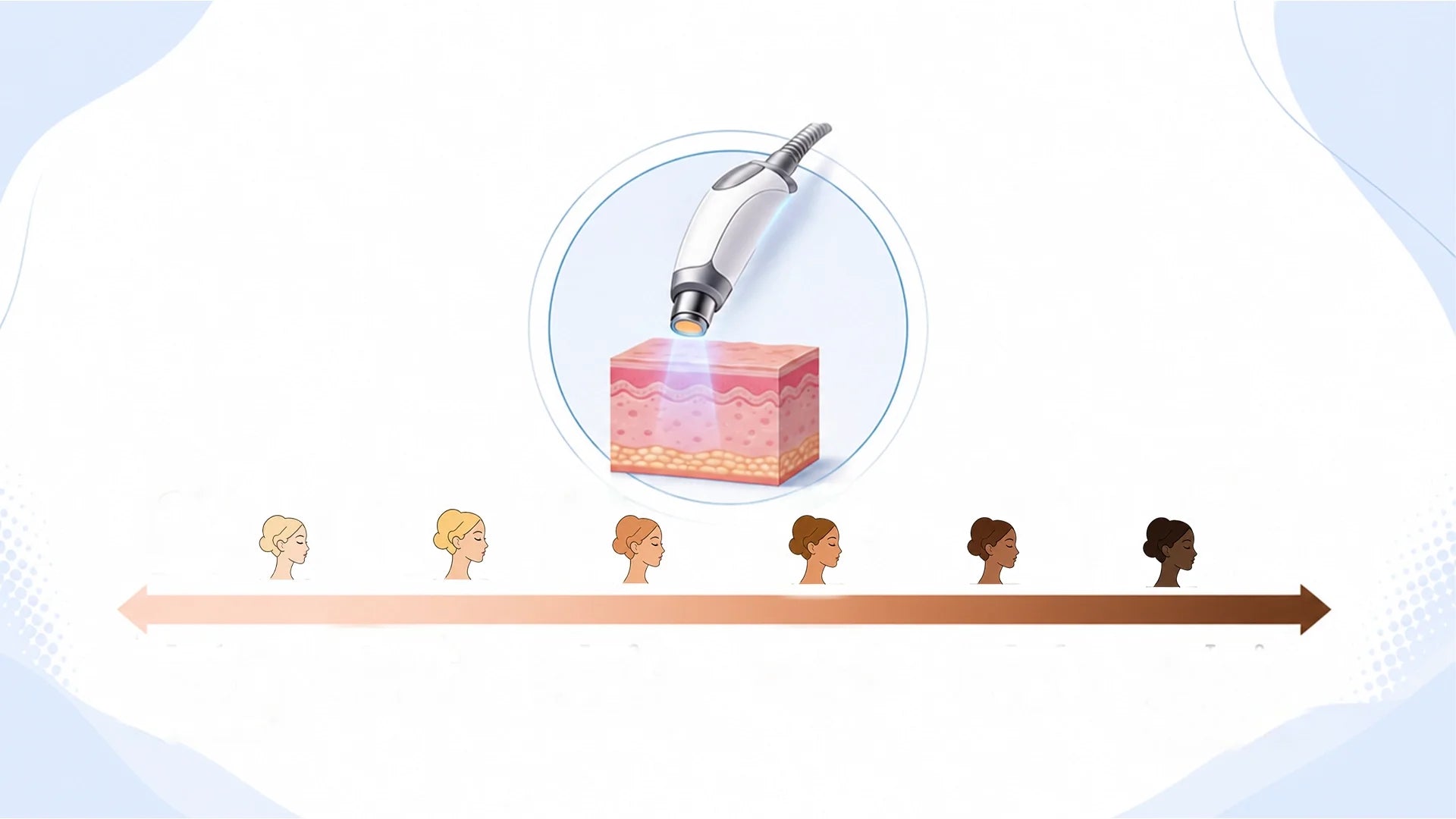
Firstly, it is not all skin types that react negatively to lasers, it is predominantly experienced by those with Types III through VI skin on the Fitzpatrick skin types. What is that, you ask?
Type I
White, very fair
Always burns, never tans
Red or blonde hair, blue eyes, freckles
Type II
White, fair
Usually burns, tans with difficulty
Blonde or red hair, blue/green/hazel eyes
Type III
Cream white to light olive
Sometimes mild burn, gradually tans
Any hair/eye colour, golden undertone
Type IV
Light brown, olive
Rarely burns, tans easily
Dark hair, dark eyes, Mediterranean/Hispanic
Type V
Brown, dark brown
Very rarely burns, tans very easily
Dark hair, dark eyes
Type VI
Dark brown to black
Never burns, deeply pigmented
Black hair, dark eyes
Here's how and why post-laser hyperpigmentation occurs:
Laser energy creates controlled thermal injury to the skin.
The heat damages the cells that produce melanin, and in response, those cells can go into overdrive, producing excess pigment as part of the wound-healing process.
Inflammation triggers melanin overproduction.
Lasers deliberately cause inflammation to stimulate skin remodeling. But that same inflammatory cascade signals pigment cells to ramp up melanin synthesis, especially in darker skin tones or melanin-rich skin that's already prone to overproduction.
The skin's barrier is compromised after treatment.
A disrupted barrier means the skin is more vulnerable to UV exposure, friction, and environmental irritants, all of which can trigger further pigmentation while the skin is in its most reactive state.
Heat spreads beyond the target zone.
Even well-calibrated lasers can transfer thermal energy to surrounding tissue. This collateral heat can stimulate melanocytes in areas that weren't meant to be treated, causing broader pigmentation responses.
Pigment cells in darker skin tones are inherently more reactive.
People with Fitzpatrick skin types III through VI have melanocytes that respond more aggressively to any form of trauma, making post-inflammatory hyperpigmentation (PIH) a significantly higher risk after laser procedures.
Incorrect laser settings or wavelength for the skin type.
Too much energy, the wrong wavelength, or inappropriate pulse duration for a given skin tone can cause excessive damage and a disproportionate melanin response.
Post-treatment UV exposure restarts the cycle.
Even brief sun exposure during the healing window (which can last weeks to months) triggers melanin production in already-sensitized skin. The healing pigment cells are primed to overreact to UV, making even incidental exposure enough to cause new dark patches.
The body reads the laser damage the same way it reads a burn or wound.
It doesn't distinguish between "controlled cosmetic procedure" and "injury." The pigmentation response is the same protective mechanism that causes dark marks after cuts, burns, or acne lesions.
Repeated treatments compound the risk.
Each session re-traumatizes the skin and restimulates the inflammatory-melanin pathway. Without adequate healing time between sessions, the cumulative effect can worsen hyperpigmentation rather than improve it.
So, what can you go for instead of a laser? This is where supplementation can be very powerful in both fading, soothing, and healing any post-laser hyperpigmentation you have, PLUS actually helping to clear the skin so you don’t have to resort to a laser in the first place.
These are my top ingredient recommendations to look for…
Slowing melanin overproduction
Licorice Root Extract — helps inhibit the enzyme that drives melanin production. It works on the overproduction, whether it's triggered by UV, hormones, or post-inflammatory response from a laser.
Polypodium — helps protect melanocytes from UV and visible light triggers that restart pigmentation. Also helps reduce the photosensitivity that makes post-laser skin so reactive.
White Tea Leaf — an antioxidant that helps interrupt the oxidative stress cycle that keeps pigment cells in overdrive.
Vitamin C — helps inhibit melanin synthesis and supports brightening of existing pigmentation.
Beta Carotene — supports cell turnover so pigmented cells shed faster and are replaced with even-toned new cells.
Calming inflammation
Dragon's Blood Powder — an anti-inflammatory that helps calm the wound-healing response that triggers excess melanin after skin trauma like laser treatment.
Pomegranate — contains polyphenols that help fight oxidative stress and reduce the chronic low-level inflammation that keeps pigmentation locked in.
Knotweed Root — helps calm inflammatory pathways and supports skin recovery.
Zinc — supports the skin's immune response and helps regulate the inflammatory cascade.
Selenium — helps neutralize the free radical damage that restarts pigmentation cycles.
Repairing and rebuilding the skin
Collagen — supports the skin's structural repair, so damaged, laser-treated skin rebuilds with better integrity.
Hyaluronic Acid — supports hydration and barrier function, which is critical for post-procedure skin that's been compromised.
Coenzyme Q10 — supports cellular energy and the skin's natural repair and renewal rate.
Grapeseed — provides antioxidant protection that helps prevent further oxidative damage during the healing window.
Amla Fruit — a natural Vitamin C source that supports collagen synthesis and brightening from within.
Biotin — supports skin cell regeneration and overall skin health during recovery.
For an easy and effective way to get all of these, the Hyper Renew Kit combines all of these key ingredients across both formulas to address all sides of that equation.
These ingredients work on the internal mechanisms that determine whether your skin actually does heal well, or whether it responds with more pigmentation. And if you address those mechanisms first, many people find they don't need the laser in the first place.
The best part is you can try the Kit for a fraction of the cost of a laser treatment, plus if you don’t get the results you are after, you can take advantage of the 45-day money-back guarantee!
Talk soon,
K xx