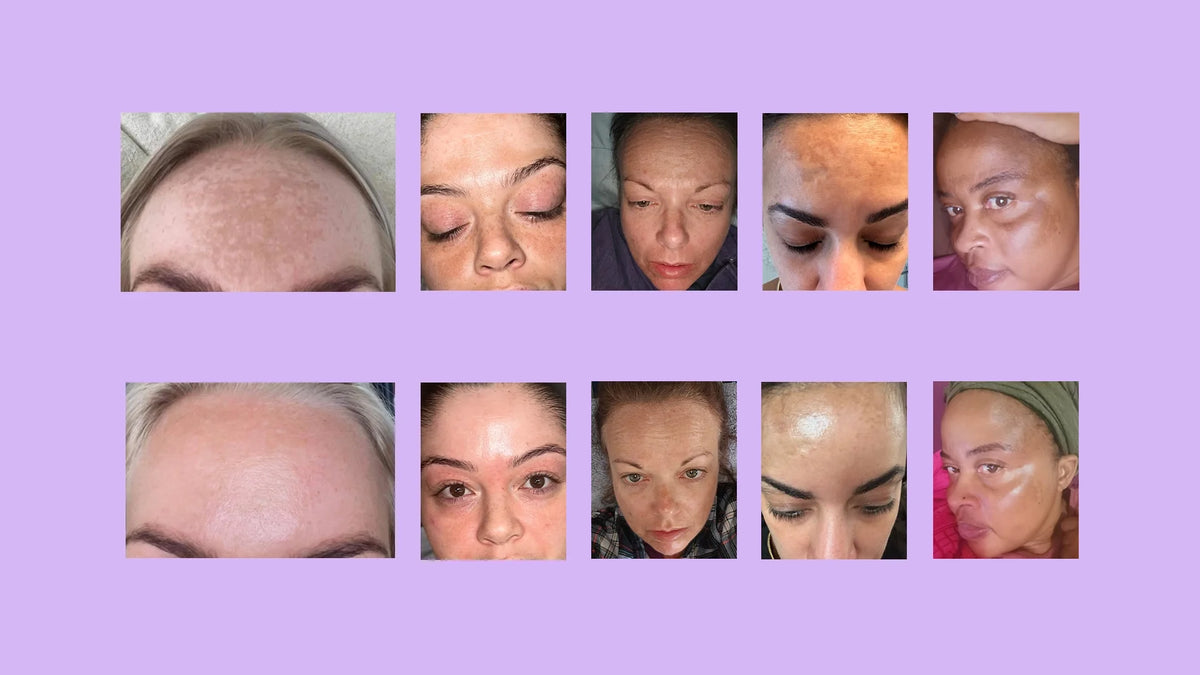
The patches that showed up aren't new damage
If you woke up one day in your late 30s to 40s and noticed a bunch of new pigmentation, this is for you.
Perhaps it showed up, and you thought to yourself, “I haven’t even been in the sun lately! Where did this come from?” Well, this, in fact, may just be perimenopause pigmentation, and it can happen because the hormone shift in your late 30s through mid-40s directly disrupts how your skin manages melanin. Here's what's actually going on:
Estrogen drops, and it drops unevenly. Estrogen is one of the hormones that helps regulate pigment cell activity. When it is stable, your cells behave predictably. In perimenopause, estrogen doesn't just decline, it swings. High months, low months, sudden dips. Every swing is a signal to your pigment cells, and they respond by overproducing melanin in patches. That's why melasma can suddenly appear in your 40s even if you never had it pregnant or on the pill.
Progesterone falls faster than estrogen, creating estrogen dominance. Even though estrogen is declining overall, progesterone often drops faster, which means estrogen is unopposed for stretches. Unopposed estrogen is one of the strongest known triggers for melasma. It's the same mechanism that drives pregnancy melasma and pill-related melasma, just happening in reverse, at a different life stage.
Cortisol rises. Perimenopause is a high-cortisol window for most women. Think disrupted sleep, hot flashes, anxiety, the works. Cortisol drives inflammation, and inflammation is one of the primary signals telling melanocytes to produce more pigment. So you're getting hit from two directions: hormonal volatility and stress-driven inflammation.
Cell turnover slows. Skin renewal cycles lengthen with age. In our 20s, the skin turns over in about 28 days. By our 40s it's closer to 40–50 days. That means pigmented cells sit on the surface longer before shedding, so even normal pigment production looks darker and lingers visibly.
Sun damage from decades earlier surfaces. A lot of perimenopause pigmentation isn't new. It is, in fact, old UV damage that's been sitting in the deeper layers of skin for years, finally pushed to the surface as the skin's repair machinery slows.
The combination of these factors is why perimenopause pigmentation tends to appear suddenly, in patches, often on the cheeks, upper lip, and forehead. And it's why topicals struggle: the trigger is internal and ongoing.
This is where natural supplementation can become so powerful, as we are targeting the root cause of the issue.
Here are my top 6 ingredients to try incorporating.
Red clover — contains phytoestrogens that gently support hormonal balance during the estrogen swings of perimenopause.
Licorice root — does double duty. It helps slow down the cells that are overproducing pigment, and gently balances the hormonal signal that's driving the dark spots in the first place.
Knotweed root — a strong antioxidant that calms the oxidative stress and inflammation that rises with cortisol in perimenopause.
Polypodium leucotomos — helps protect pigment cells from oxidative damage and UV triggers. This is critical for perimenopause because old sun damage from your 20s and 30s is surfacing now, and this helps stop the underlying cascade that keeps feeding it.
Collagen — supports skin repair and turnover, which is the missing piece in perimenopause. Cell turnover slows from 28 days to 40–50, so pigmented cells linger. Collagen supports the renewal process so new, clearer cells can come through.
Vitamin C — interrupts melanin synthesis and supports collagen production.
Now, in addition to these supplements, there are some lifestyle factors that can help hugely.
Prioritise sleep — especially the first half of the night. Cortisol regulation depends on deep sleep, and deep sleep clusters in the first 3–4 hours after you fall asleep. Disrupted sleep keeps cortisol elevated, and elevated cortisol keeps inflammation high, which keeps pigment cells switched on. Going to bed earlier matters more than total hours.
Wear SPF every single day, even indoors near windows. UV rays pass through glass and through clouds, and in perimenopause, your pigment cells are already hyper-reactive. This is the single biggest external trigger you can control.
Cut back on alcohol, especially red wine. Alcohol spikes inflammation, disrupts sleep (which spikes cortisol), and stresses the liver, which is your body's main hormone-clearing organ. When the liver is overloaded, estrogen clears more slowly, which worsens the estrogen dominance driving the pigment. Even two drinks a week less makes a visible difference over a few months.
Eat protein at breakfast. Blood sugar swings drive cortisol and inflammation, and in perimenopause, the body is more sensitive to glucose spikes than it was in our 20s. Starting the day with 25–30g of protein stabilises cortisol for the whole morning. You don't need a gym. Twenty minutes with dumbbells at home, twice a week, is enough to shift the hormonal picture over a few months.
Perimenopause pigmentation isn't something you've done wrong. It's your skin reacting to a hormonal shift happening underneath, and no cream sitting on the surface is going to reach it.
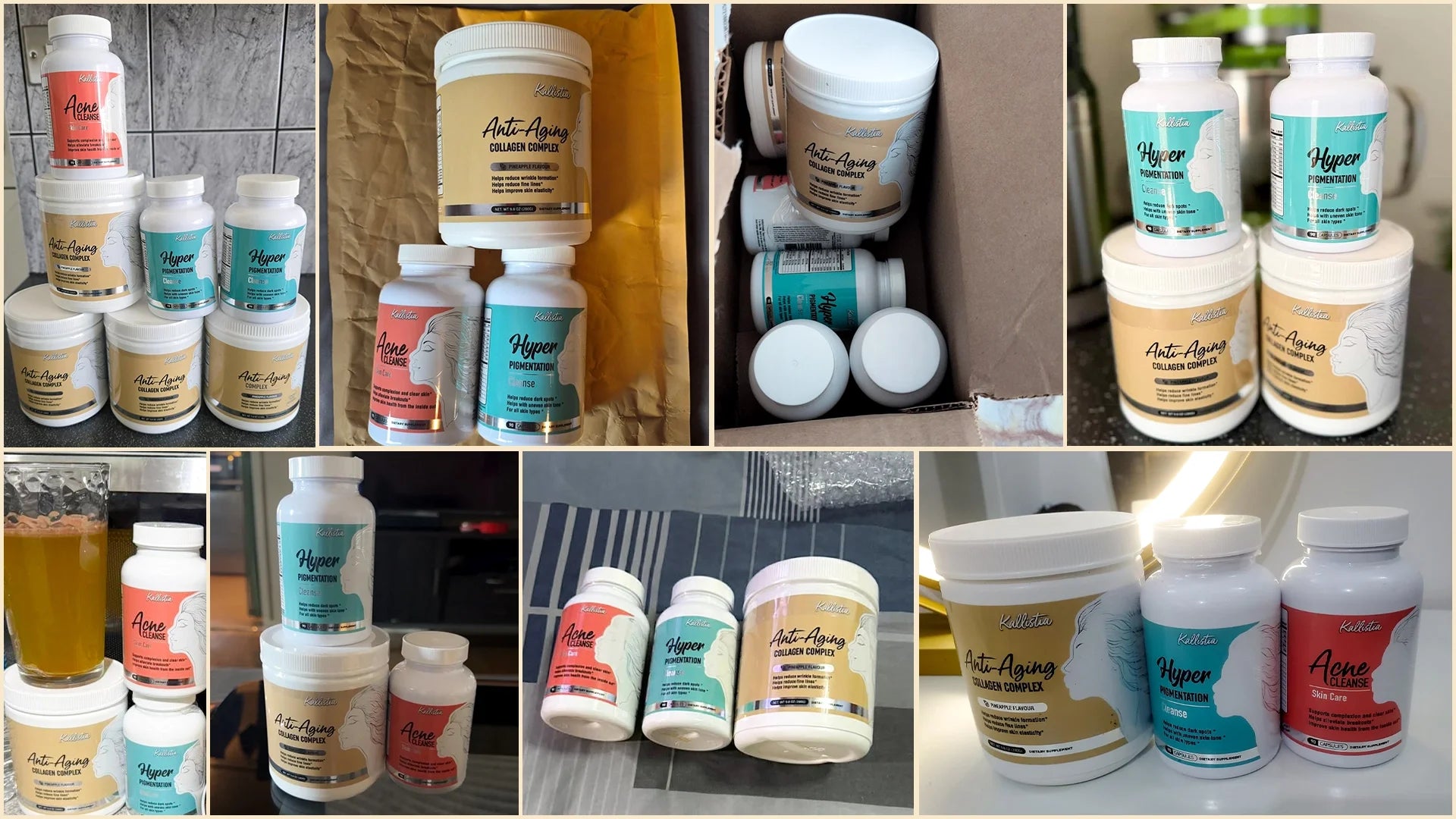
This is exactly why I created the Perfect Skin Kit.
3 formulas, working on the hormonal signal, the inflammation, the oxidative stress, and the renewal cycle all at once. Which is what perimenopause skin actually needs.
You can try the Perfect Skin Kit risk-free with my 45-day money-back guarantee. If it's not for you, you get your money back.
Talk soon,
K xx