
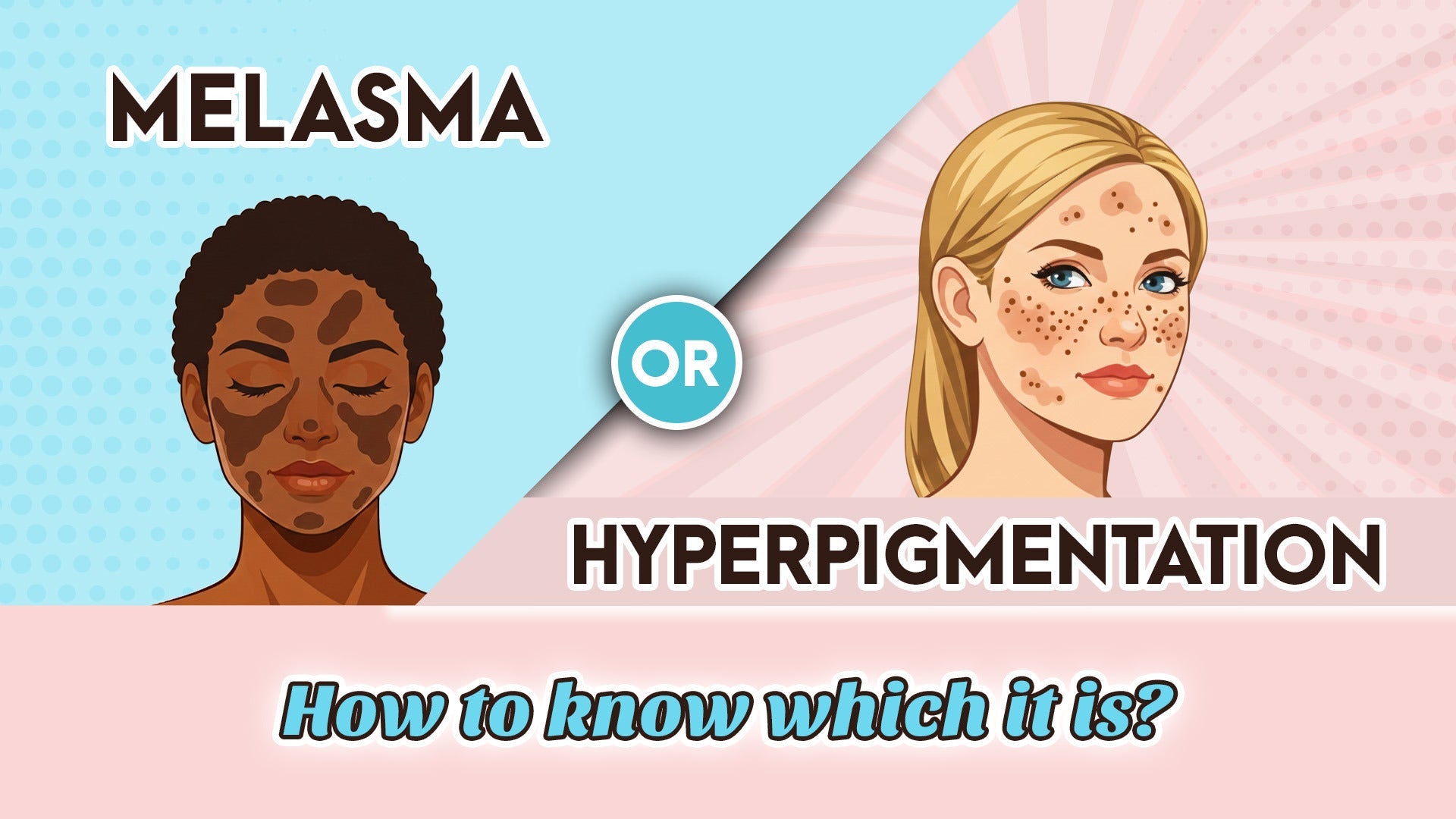
Melasma and hyperpigmentation are two very similar-looking types of dark spots — but what triggers them is different.
It can be hard to know which one you actually have, but the best way to tell is by looking at the pattern and triggers.
Melasma vs Hyperpigmentation
Melasma often appears as larger, symmetrical patches on both sides of the face and is commonly triggered by hormones, heat, sun exposure, or pregnancy.
Hyperpigmentation is usually smaller, more defined spots left behind after acne, inflammation, or skin trauma — and it can appear anywhere.
Now, while they are in fact two different things, the interesting part is that both are driven by the same internal processes.
These include:
Inflammation
Oxidative stress
Overactive pigment cells causing melanin to clump and sit unevenly in the skin
That’s why dark patches form — and why they’re so stubborn to fade.
The great thing about this is that we can use the same things to address both types of discoloration.
Because I created the Perfect Skin Kit to work from within to calm inflammation, reduce oxidative stress, and regulate melanocyte activity, it supports fading dark patches regardless of whether it’s melasma or hyperpigmentation.
The goal isn’t just lightening what’s already there, but correcting the internal triggers so the pigmentation is less likely to return.
This is why they are loved so universally — they deliver lasting results so you can enjoy that clear skin confidence!
Click here to check out the results!
Shop the products below and take advantage of my 45 day money back guarantee!
Talk soon,
K xx