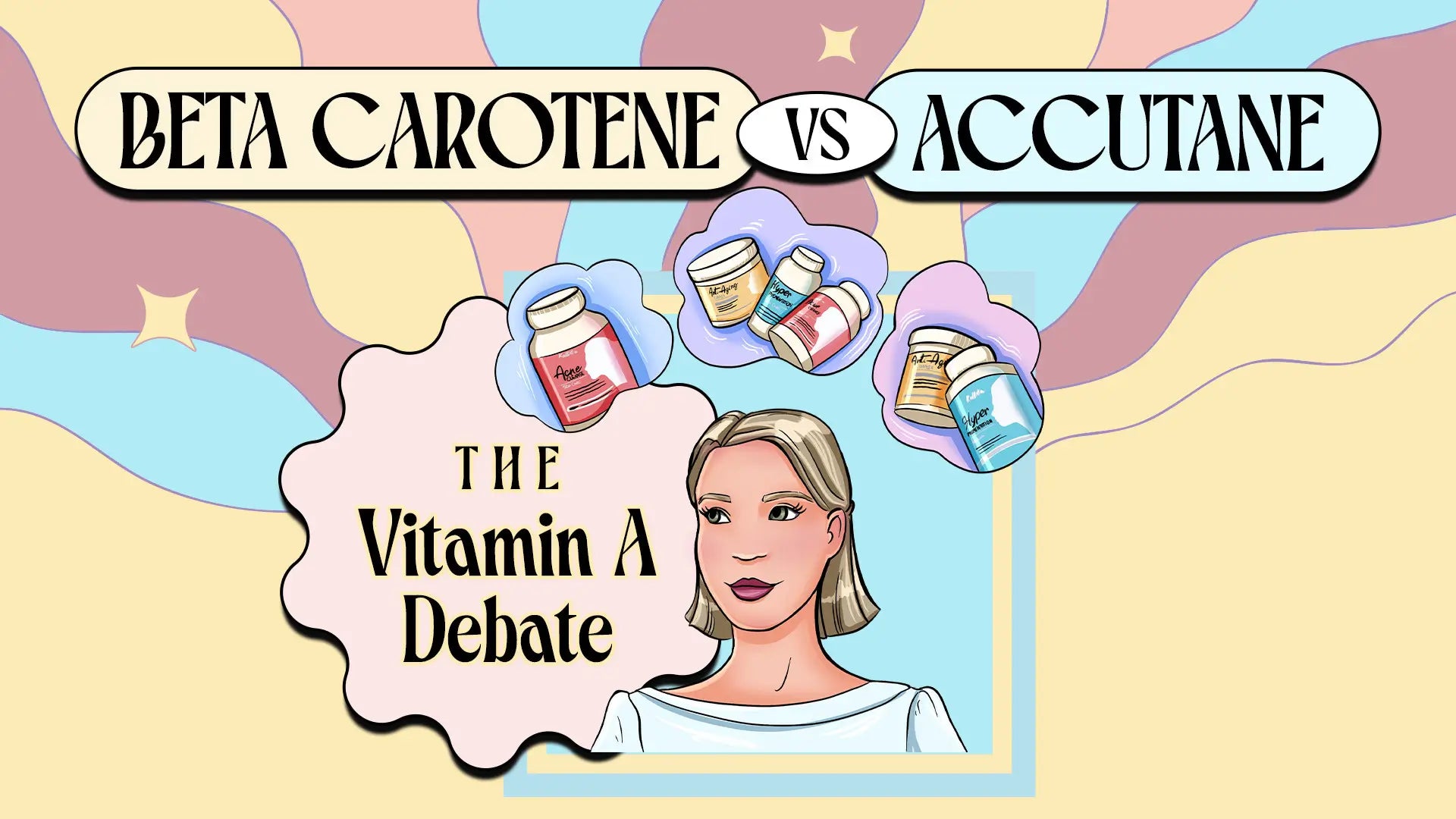
If you are someone who has struggled with your skin at some point, you have likely heard of the medication Accutane, and perhaps even the topical product tretinoin.
These are both high-dose vitamin A products that are prescription only — and while yes, they can help for some, they also carry a high amount of risk and require constant blood testing to keep you safe.
Now, if you have heard of them, you likely had a thought about vitamin A in supplements too.
But the thing is… all vitamin A is not the same.
So I am here to break down the differences.
When we are talking about Kallistia’s formulas, the vitamin A in them is derived from beta-carotene.
It is a plant-based carotenoid pigment, extracted from colourful fruits, vegetables, and algae.
Think:
- Carrots (the classic and richest natural source)
- Sweet potatoes
- Pumpkin & squash
- Red and orange peppers
- Apricots & mango
- Spinach & dark leafy greens (even though they’re green, they’re rich in carotenoids)
Now, the Vitamin A from beta-carotene and the vitamin A used in Accutane are technically related — but they behave very differently in the body.
Beta-carotene is a pro-vitamin A. That means your body only converts it into active vitamin A when it actually needs it.
The conversion is slow and tightly regulated, so excess beta-carotene does not suddenly flood your system with vitamin A.
This is why beta-carotene from food and supplements is considered very safe, non-toxic, and suitable for long-term use — even for skin support.
Accutane, on the other hand, is isotretinoin, which is a synthetic retinoid.
This is a direct, highly active form of vitamin A. It does not require conversion.
When you take it, you are delivering a pharmacological dose of active vitamin A straight into the system, at levels far beyond what the body would naturally produce from food.
This is why Accutane powerfully shrinks oil glands and suppresses sebum — but also why it carries such high risks and side effects (dryness, liver strain, lipid changes, mood effects, strict pregnancy precautions, etc.).
So in simple terms:
Beta-carotene
→ Gentle precursor
→ Only converts as needed
→ Regulated, non-toxic
→ Supports skin health safely over time
Accutane (isotretinoin)
→ Direct active vitamin A
→ Very high dose, unregulated
→ Pharmacological effect
→ Powerful but high-risk
This is also why beta-carotene and plant-based vitamin A in supplements are used to support skin function and cell turnover naturally, whereas Accutane is essentially a drug that forces the skin into a suppressed oil-production state.
That is why I use plant-based vitamin A in Kallistia for long-term skin support — without damaging the skin barrier.
Instead, it works to strengthen the skin and lock in a hydrated glow that is nothing like what Accutane or tretinoin can deliver.
Click HERE to shop my natural vitamins
Hope this info was helpful!
Don’t forget — if there is ever anything else you would like to know, please don’t hesitate to email me or send me a DM.
I am always here to help 💕
Talk soon,
K xx